


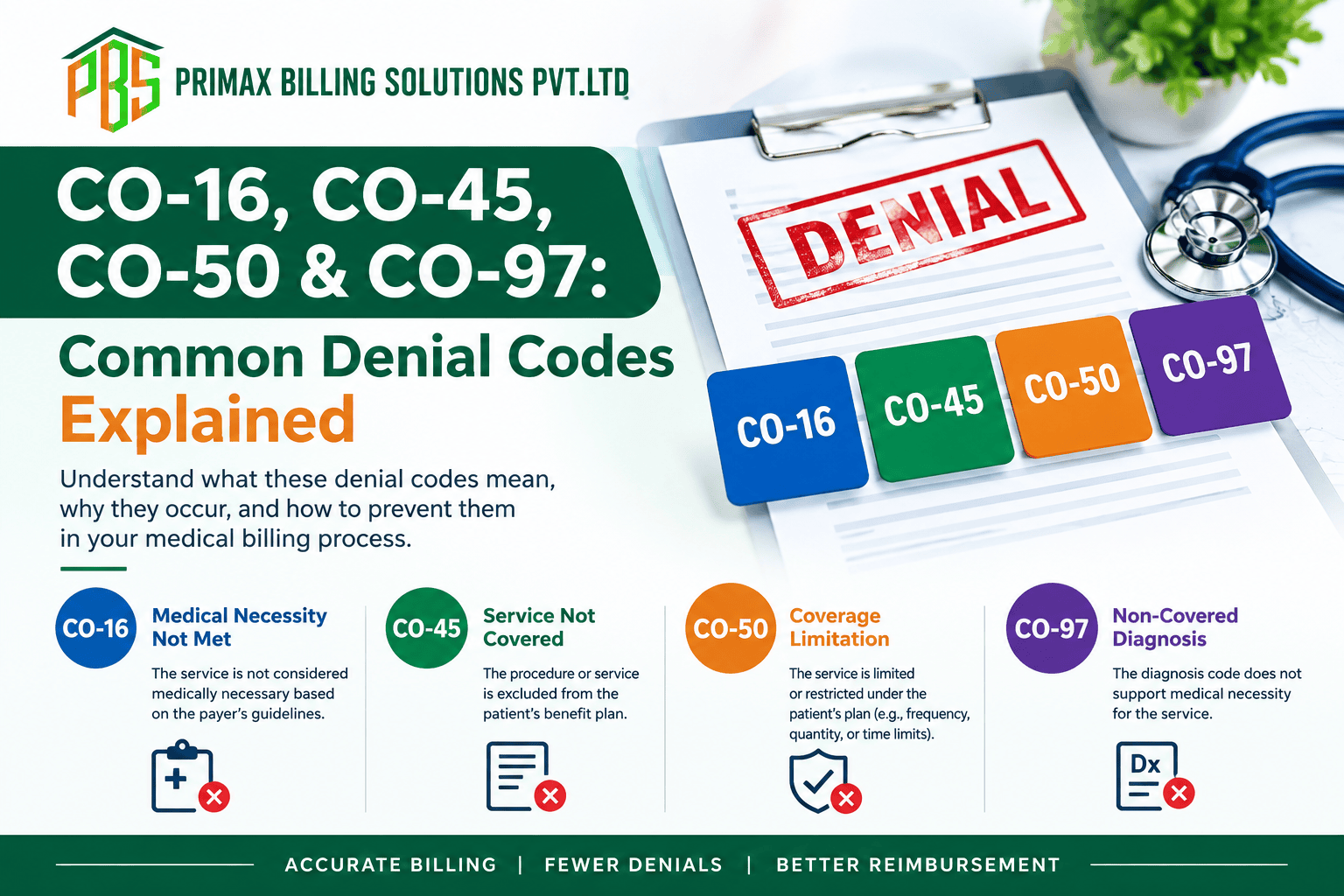
CO-16, CO-45, CO-50 & CO-97: Common Denial Codes Explained are denial codes that medical billers see regularly when working with US insurance claims. For a billing team, these codes are not just numbers on an EOB or ERA. They can tell you what went wrong with a claim and what needs to be checked before taking the next step.
CO-16: Something Is Missing
CO-16 usually means the payer needs additional information before the claim can be processed. It could be an incorrect patient detail, missing modifier, diagnosis issue, or another piece of information. The best approach is to check the claim and the payer’s remark code carefully before sending it again.
CO-45: The Contractual Adjustment
CO-45 means the billed amount is higher than the amount allowed under the provider’s contract with the insurance company. This is a common adjustment in medical billing and is generally posted as a contractual adjustment. Accurate payment posting is important here so the balance does not end up in the wrong place.
CO-50: Medical Necessity
CO-50 can be frustrating because the insurance company has determined that the service does not meet its medical necessity guidelines. Before appealing, the billing team should review the diagnosis, medical records, documentation, and the payer’s specific coverage policy.
CO-97: Included in Another Service
CO-97 means the payer considers the service included in another procedure or service. Review the CPT codes and modifiers when this happens. Check the other claim lines as well. This can help determine whether the adjustment is correct. It can also show if the claim needs further attention.
Why Denial Management Matters
CO-16, CO-45, CO-50 & CO-97: Common Denial Codes Explained shows why simply posting a denial is not enough. Repeated denials may indicate an underlying billing problem. That problem may need to be corrected.
At PrimaxBS, we review claims and follow up on accounts receivable. We also track repeated denial patterns. This helps healthcare providers reduce avoidable issues. It can also improve the revenue cycle.
For medical billing teams, the goal is simple. Understand the denial. Find the reason. Take the right action. Prevent it from happening again.