


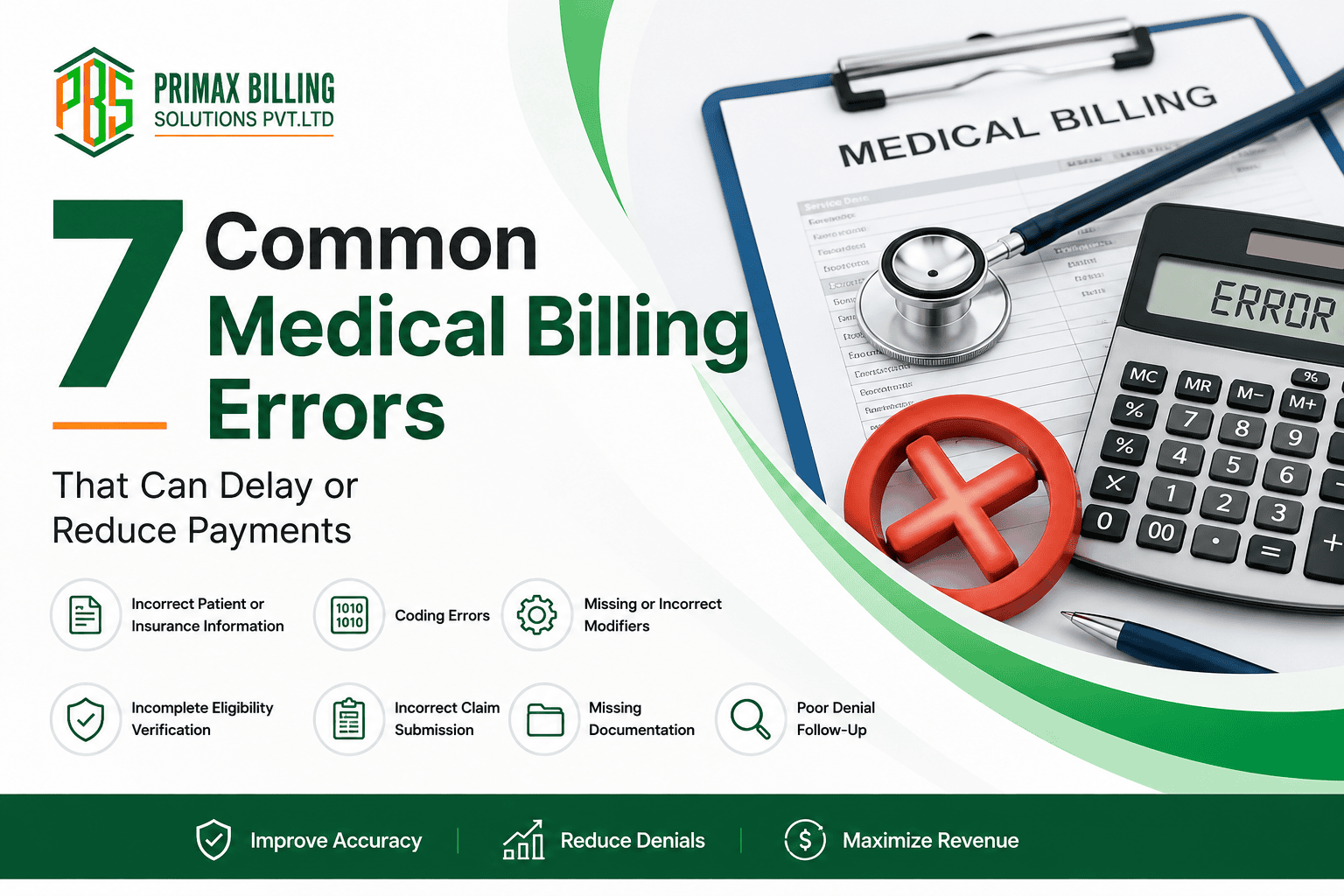
Medical billing errors can cause claim denials, delayed payments, and revenue loss for healthcare practices. Even small mistakes in patient information, coding, insurance verification, or claim submission can affect the revenue cycle. 7 Common Medical Billing Errors That Can Delay or Reduce Payments
At PrimaxBS, we understand the importance of accurate medical billing and timely claim follow-up. Here are seven common billing errors practices should watch for.
1. Incorrect Patient or Insurance Information
Incorrect patient names, member IDs, group numbers, or insurance details can result in claim rejections.
How to prevent it: Always verify patient demographics and insurance information before submitting claims.
2. Coding Errors
Incorrect CPT, HCPCS, or ICD-10 codes can lead to denials or incorrect reimbursement. Coding should accurately reflect the services provided and the supporting documentation.
3. Missing or Incorrect Modifiers
Using the wrong modifier or failing to include a required modifier can cause payment issues.
How to prevent it: Review CPT codes and payer-specific requirements before claim submission.
4. Incomplete Eligibility Verification
Submitting claims without confirming active coverage can result in avoidable denials and unexpected patient balances.
Verify eligibility, copays, deductibles, coinsurance, and authorization requirements whenever applicable.
5. Incorrect Claim Submission
Wrong payer information, missing fields, incorrect provider details, or duplicate claims can cause rejections.
A clean claim review before submission can help identify these issues early. 7 Common Medical Billing Errors That Can Delay or Reduce Payments
6. Missing Documentation
Incomplete medical records or documentation that does not support the billed service can result in claim delays or denials.
Providers and billing teams should ensure documentation supports the services and codes submitted.
7. Poor Denial Follow-Up
Denied claims should be reviewed and worked promptly. Delayed follow-up can increase accounts receivable and lead to lost revenue.
A structured denial management process helps identify the reason for denial, correct the issue, and submit an appeal or corrected claim when appropriate.
How PrimaxBS Can Help
Managing medical billing, claims, denials, and accounts receivable can be time-consuming for healthcare practices. PrimaxBS provides medical billing and revenue cycle support, including eligibility verification, claims processing, denial management, payment posting, and AR follow-up.
With an organized billing process and consistent follow-up, practices can reduce avoidable errors and improve their revenue cycle performance.
Conclusion
Medical billing errors can have a direct impact on a practice’s cash flow. By improving eligibility verification, coding accuracy, claim submission, documentation, and denial follow-up, healthcare providers can reduce payment delays and protect their revenue.
PrimaxBS helps healthcare providers manage their billing and revenue cycle needs so they can focus more on patient care.
FAQs
What are common medical billing errors?
Incorrect patient information, coding errors, eligibility issues, missing modifiers, claim submission errors, documentation problems, and poor denial follow-up.
How can medical billing errors be reduced?
Through accurate eligibility verification, proper coding, clean claim submission, complete documentation, and timely denial follow-up.
How can PrimaxBS help?
PrimaxBS supports healthcare providers with medical billing, claims, eligibility verification, denial management, payment posting, and AR follow-up.