


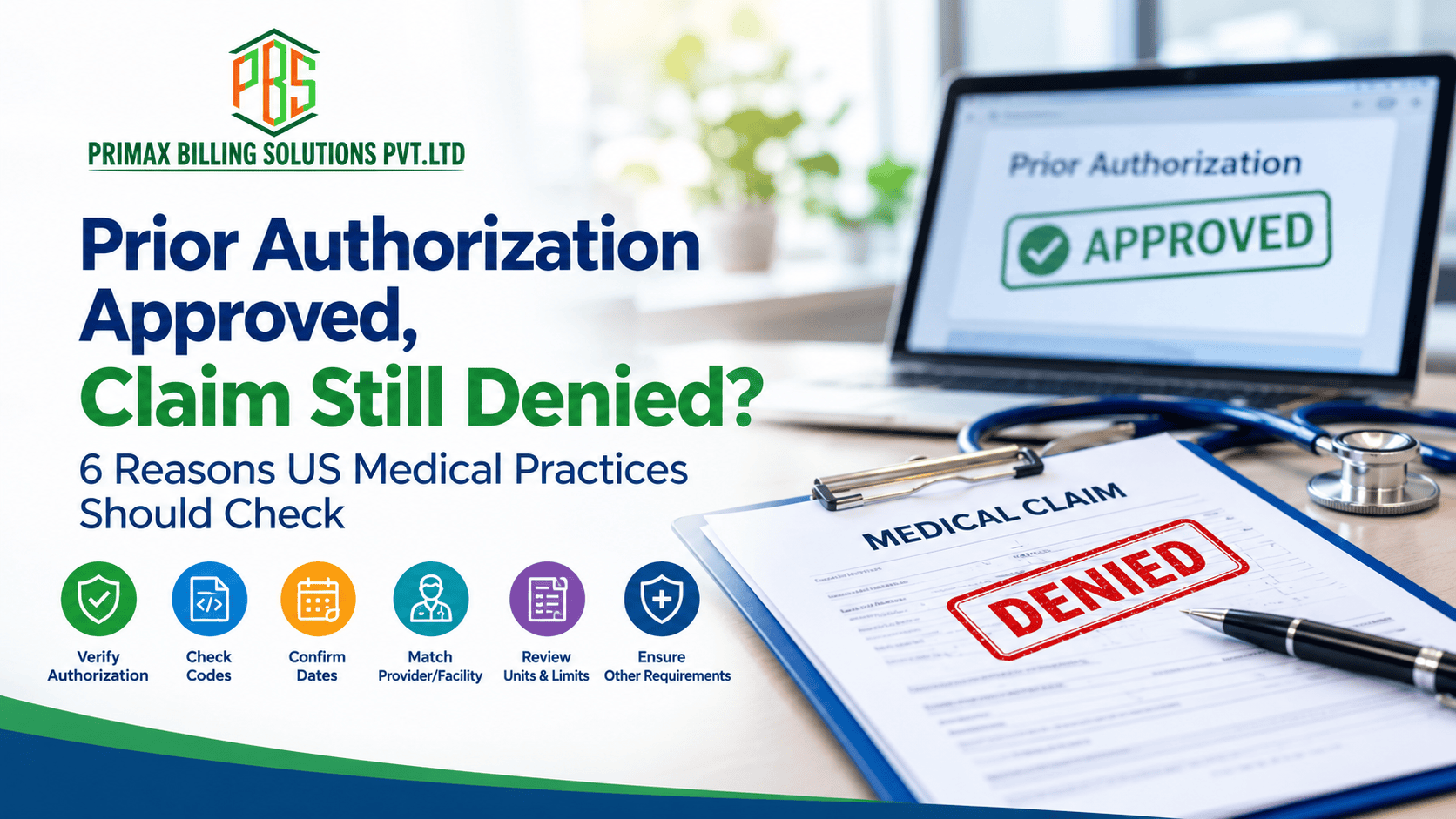
Prior Authorization Approved, Claim Still Denied? 6 Reasons US Medical Practices Should Check is an important topic for healthcare providers facing a prior authorization claim denial. Even when an insurance company approves a service in advance, a claim may still be denied because of incorrect CPT codes, authorization dates, provider details, or other payer requirements. US medical practices can reduce avoidable denials by reviewing authorization details before submitting claims.
Why Can an Approved Authorization Still Result in a Denial?
Prior authorization confirms approval for a specified service under the applicable conditions. It does not automatically guarantee payment. US medical billing teams should review the following six potential issues.
1. Authorization Number Is Missing or Incorrect
An incorrect authorization number or a number missing from the claim can cause processing problems. Verify the number against the payer’s approval record before submission.
2. CPT Code Does Not Match the Authorization
The approved procedure may differ from the CPT code billed. Confirm that the authorization covers the service actually performed and documented.
3. Authorization Dates Do Not Match
Some approvals apply only during a specific period. Check the authorized dates against the date of service.
4. Provider or Facility Details Are Different
The authorization may identify a particular rendering provider or facility. Confirm that the submitted claim matches the approval requirements and the payer’s rules.
5. Required Units or Services Exceed the Approval
An authorization may specify a limited number of visits, units, or procedures. Review the approved quantity and any applicable limits before billing.
6. Eligibility or Other Payer Requirements Are Not Met
Authorization does not replace insurance eligibility verification, medical necessity requirements, correct coding, or other applicable coverage rules. Check the denial reason and the patient’s coverage for the date of service.
How PrimaxBS Helps Prevent Prior Authorization Denials
At PrimaxBS, we understand how authorization errors can disrupt the revenue cycle. A structured workflow that includes benefits verification, authorization tracking, accurate claim submission, denial review, and timely follow-up can help healthcare practices identify preventable billing issues.
When a claim is denied, review the remittance advice, determine the actual denial reason, correct any billing errors, and follow the payer’s applicable reconsideration or appeal process and deadlines. Do not assume that every authorization-related denial can be resolved through resubmission alone.
Conclusion
Prior Authorization Approved, Claim Still Denied? 6 Reasons US Medical Practices Should Check highlights why authorization tracking and claim review should work together. By verifying approval details and investigating denials promptly, healthcare practices can strengthen their billing workflows and reduce avoidable rework.